Ostróda Reggae Festival 23-26.07.2026


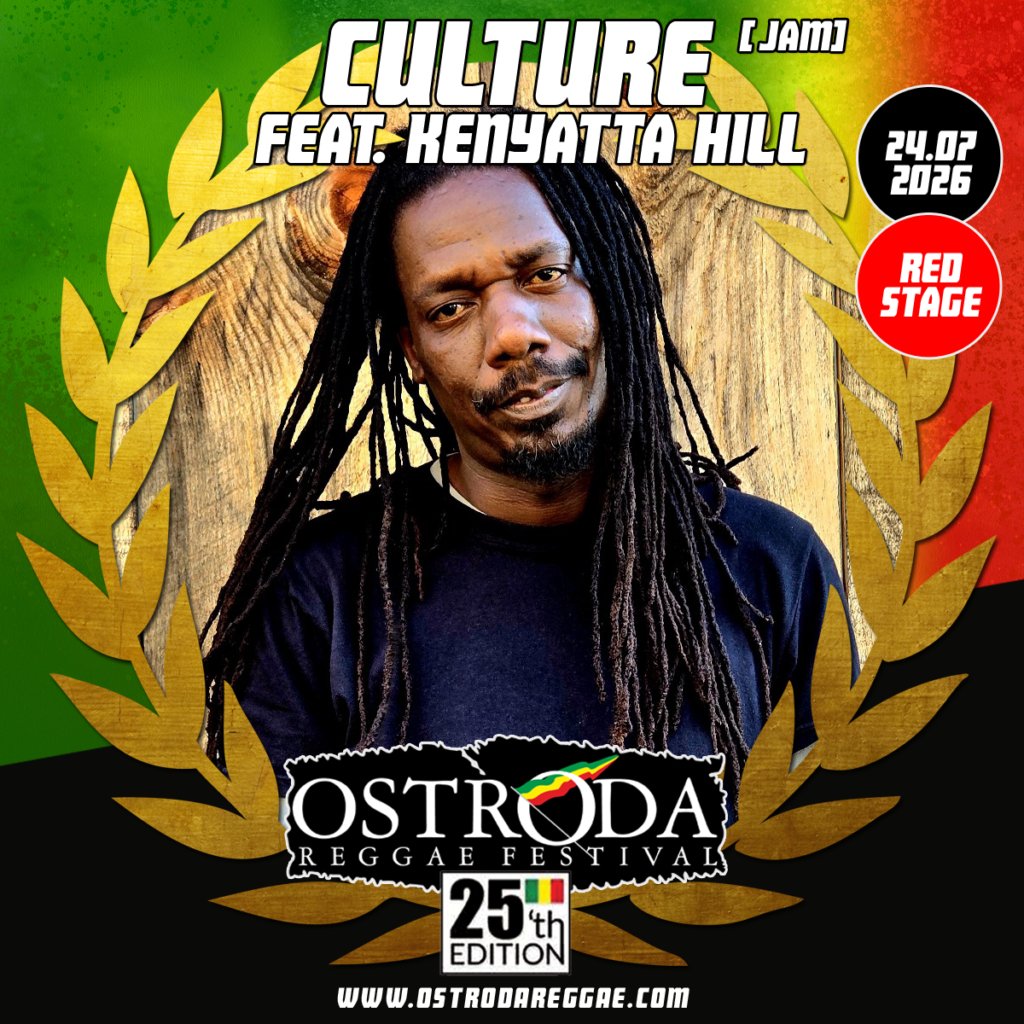
CULTURE FEAT. KENYATTA HILL (Jamajka)
Linki:
www.facebook.com/kenyattahill.official
Video:
Kenyatta „Culture” Hill – Daddy (clip)
Culture feat. Kenyatta Hill – I’m Not Ashamed, live Reggae Lake Festival 2025
Culture ft Kenyatta Hill live Rototom Sunsplash 2025
Culture – Two Sevens Clash
Culture ft Kenyatta Hill – Two Sevens Clash live Rototom Sunsplash 2019
Culture – International Herb (Live at Reggae On The River)
Culture ft Kenyatta Hill – International Herb live @ Reggae Central Dordrecht
Pieśni grupy Culture mają fundamentalne znaczenie dla historii roots reggae. Po raz pierwszy usłyszymy je na żywo w Polsce.
Kariera Kenyatty Hill rozpoczęła się w dniu śmierci jego ojca. Joseph Hill, wokalista i autor tekstów legendarnego jamajskiego trio wokalnego Culture, zasłabł i zmarł podczas europejskiej trasy koncertowej w 2006 roku, dzień przed długo oczekiwanym pierwszym polskim koncertem w Ostródzie. Ku zdumieniu promotorów, fanów i krytyków zaledwie kilka dni później Kenyatta postanowił kontynuować trasę i dał kilkanaście poruszających występów. Było to wydarzenie bezprecedensowe niezależnie od gatunku muzycznego czy epoki. Podobnie jak jej ojciec przez wiele lat Kenyatta dał z siebie tak wiele, że zdawali się być jednością, a ich niesamowicie podobne głosy i stwarzany klimat rozpaliły krytyków i dały początek nowej mantrze reggae: „magia miast tragedii”.
Podczas koncertu upamiętniającego jej ojca w Kingston występ Kenyatty z Culture był punktem kulminacyjnym znakomitego wieczoru i zapewnił mu entuzjastyczne wsparcie lokalnej publiczności. Następnie Kenyatta poprowadził Culture podczas serii występów w Stanach Zjednoczonych, na Karaibach, w Brazylii, Argentynie i Peru, ponownie zachwycając publiczność.
Nazwany na cześć Jomo Kenyatty – pierwszego premiera Kenii, zainspirowany elementami dancehallu, zakorzeniony w tradycji i zmotywowany do kontynuowania twórczości ojca, Kenyatta zaczął pisać, aby dokończyć utwory rozpoczęte przez Josepha i stworzyć własną muzykę. Na swoim poruszającym debiutanckim singlu „Daddy” (Tafari Records), nagranym z udziałem mistrzowskiego zespołu muzyków, w tym Sly Dunbara i Deana Frasera, a wyprodukowanym przez Lynforda „Fatta” Marshalla, Kenyatta mierzy się z emocjonalnym bólem i niepewnością, które odczuwał po śmierci ojca. Przyznał, że płakał podczas pisania, tak jak europejska publiczność płakała, śpiewając razem z nim.
„Pass the Torch”, poszukiwany dziś pełnowymiarowy album, został wydany w 2007 roku dla długoletnich fanów i krytyków Culture, którzy przyjęli go z entuzjazmem. Debiutancka płyta Kenyatty Hill skłania do stwierdzenia „Culture ŻYJE”. W 2011 roku ukazał się album „Live On: Tribute to Culture” gdzie Kenyatta wykonuje piosenki ojca, w tym „Two Sevens Clash” oraz „International Herb”. Culture z udziałem Kenyatty Hill nadal łączy filozofię świadomego reggae Josepha z żywą, młodzieńczą wizją muzyczną Kenyatty.
W ten sposób Ostróda oddaje hołd dorobkowi Culture i pozytywnym finałem zamyka historię, która rozpoczęła się na festiwalu tragicznie odwołanym koncertem zespołu dokładnie 20 lat temu.
CULTURE FEAT. KENYATTA HILL
(Jamaica)
Culture’s songs are fundamental to the history of roots reggae. First time live in Poland, we are closing the circuit.
Kenyatta Hill’s career began the day his father’s ended. Joseph Hill, singer and songwriter of the legendary Jamaican vocal trio Culture, collapsed and died during a European tour in 2006, a day before his long awaited first Polish show in Ostróda. To the astonishment of promoters, fans and critics, just few days later Kenyatta decided to continue the tour and delivered electrifying performances on several occasions. This was unprecedented in any genre or era. Kenyatta gave so much of himself, just as his father had for so many years, that the two seemed to become one, their similar voices and vibes igniting critics and giving birth to a new reggae mantra: „magic, not tragic.”
At the Ranny Williams Center in Kingston, Jamaica, during the memorial concert for her father, Kenyatta’s performance with Culture was the highlight of a stellar evening and earned her the enthusiastic support of the local reggae audience, who needed no encouragement to listen. Kenyatta then led Culture on a series of performances in the United States, the Caribbean, Brazil, Argentina and Peru, once again leaving audiences amazed and delighted
Influenced by elements of dancehall, rooted in roots tradition, and motivated to continue his father’s work, Kenyatta began writing to finish the songs Joseph had started and create his own music. On his poignant debut single, „Daddy”, backed by a masterful group of musicians including Sly Dunbar and Dean Fraser, and produced by Lynford „Fatta” Marshall, he confronts the emotional pain and uncertainty he felt after his father’s passing. He cried while writing, just as European audiences cried while singing along.
“Pass the Torch”, the full-length album described as „a collector’s item,” was released in 2007 for longtime Culture fans and critics who embraced the son, named in honor of Jomo Kenyatta, Kenya’s first Prime Minister. Kenyatta Hill’s debut prompted to proclaim: „Culture is ALIVE”. In 2011 „Live On: Tribute To Culture” was released, featuring Kenyatta’s performances of his father’s songs, including „Two Sevens Clash” and „International Herb”.
Indeed, Culture featuring Kenyatta Hill continues to share Joseph’s conscious reggae wisdom with Kenyatta’s youthful and vibrant musical vision.
In this way, Ostróda pays tribute to the achievements of Culture and brings a positive ending to a story that began at the festival with the band’s tragically canceled concert exactly 20 years ago.